
SSK in knitting: how to slip slip knit
Edited by Bernadett · Updated
SSK (slip, slip, knit) is a left-leaning decrease: slip 2 stitches knitwise one at a time, put the left needle into their fronts and knit them together. The 2 stitches become 1 that leans left, the mirror of k2tog, which leans right. Knitting the two slipped stitches together this way is knitting them together through their back loops, which is how the Craft Yarn Council's abbreviation describes it: one move, two descriptions. Patterns often pair the two on opposite sides of a piece.
- Pattern code
- ssk
- Chart symbol
- a square with a line slanting up to the left
- Stitches
- 2 become 1, a decrease of 1
- Leans
- To the left, seen from the right side
- Its mirror
- k2tog, leaning right
- On a wrong-side row
- ssp, slip slip purl
What ssk builds on
SSK is made of two moves: slipping a stitch and the knit stitch. Slipping moves a stitch from the left needle to the right without knitting it, and knitwise means the right needle goes in as if to knit: from left to right, front to back.
Patterns use it on right-side rows, with the yarn at the back, so practice on a piece of stockinette a few rows long rather than on the cast-on row.
How to ssk, step by step
Knit up to the two stitches the pattern decreases, with the yarn at the back. Written right-handed; you end with 1 new stitch on the right needle where 2 were on the left.
Step 1: Slip the first stitch knitwise: put the right needle into it from left to right and front to back, as if to knit, and move it onto the right needle without wrapping the yarn.
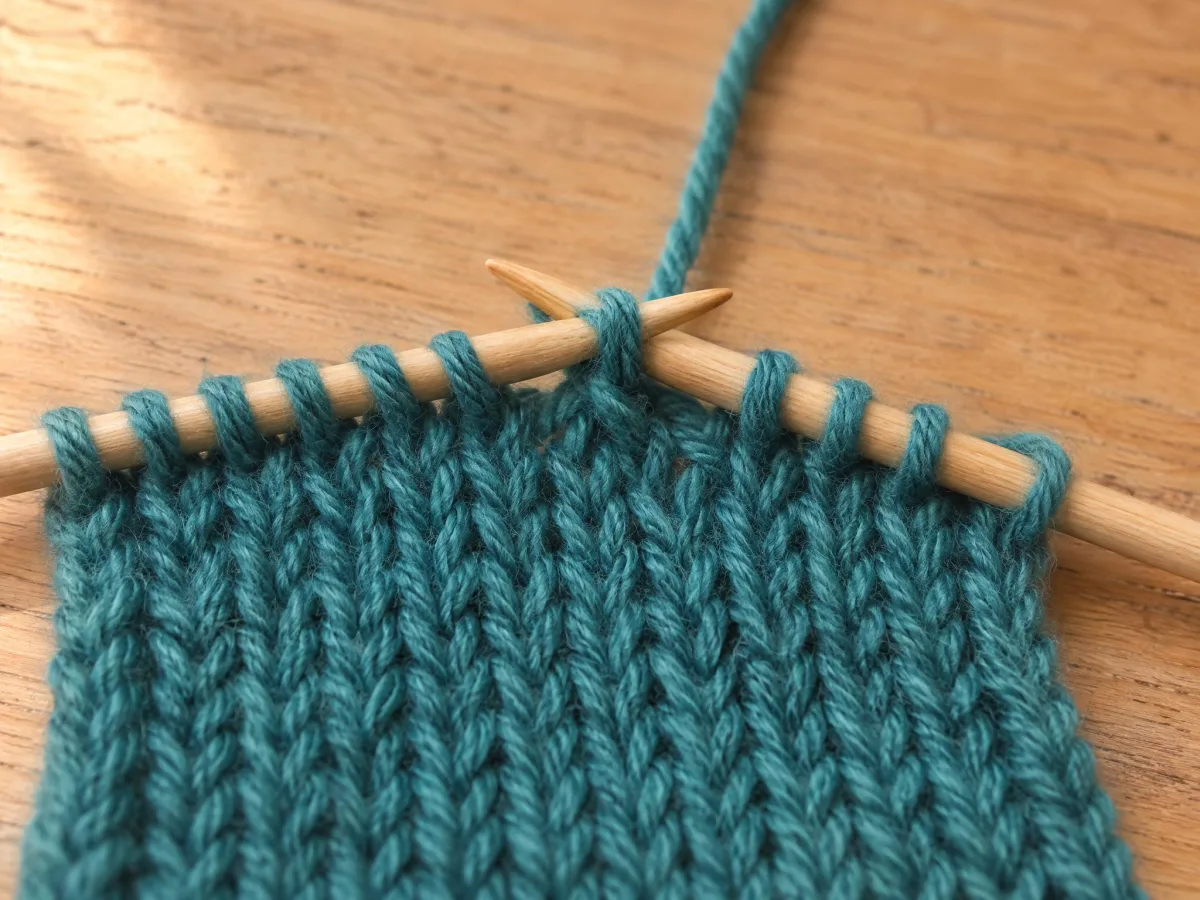
Step 2: Slip the next stitch knitwise the same way, on its own, never both at once. The slipped stitches now sit on the right needle, each turned by the knitwise slip.
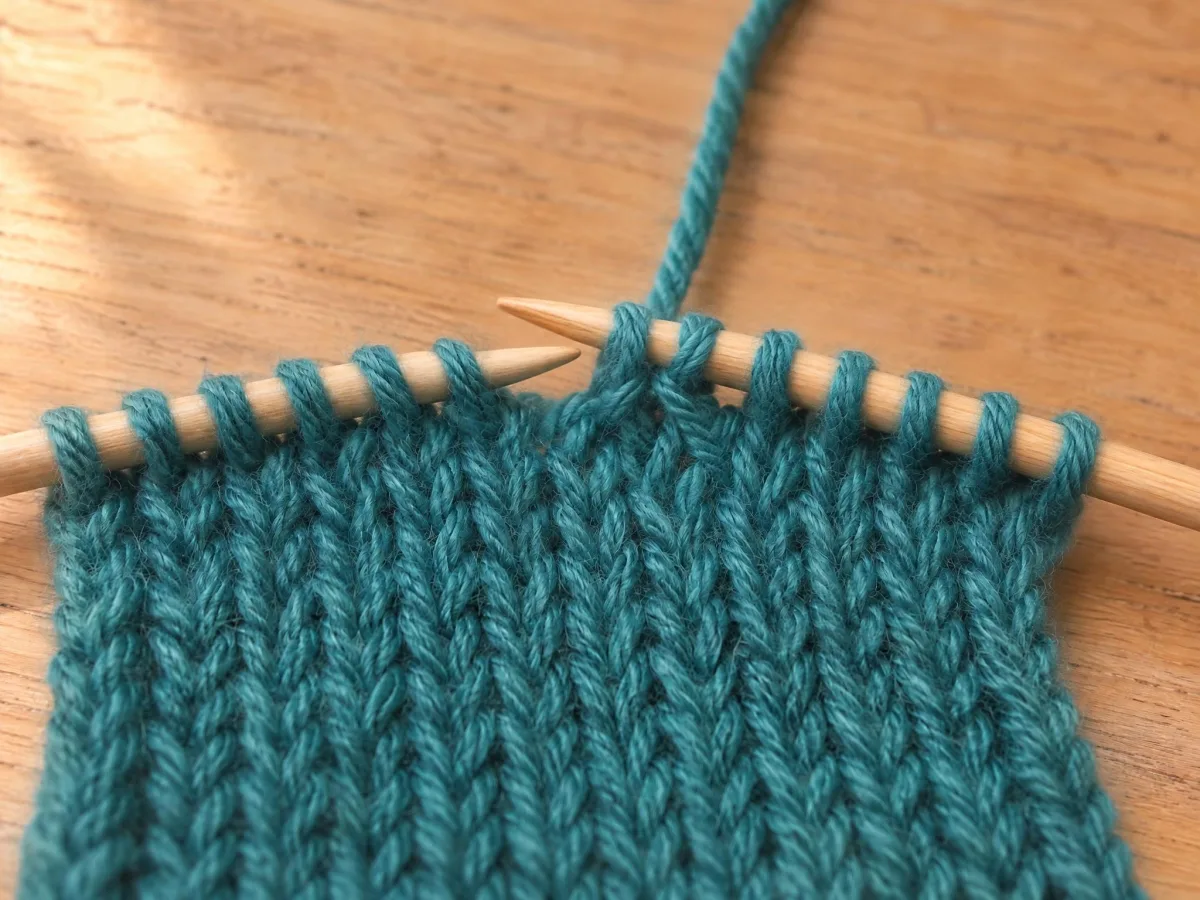
Step 3: Put the tip of the left needle into the fronts of both slipped stitches, from left to right, so the left needle ends up in front of the right one.
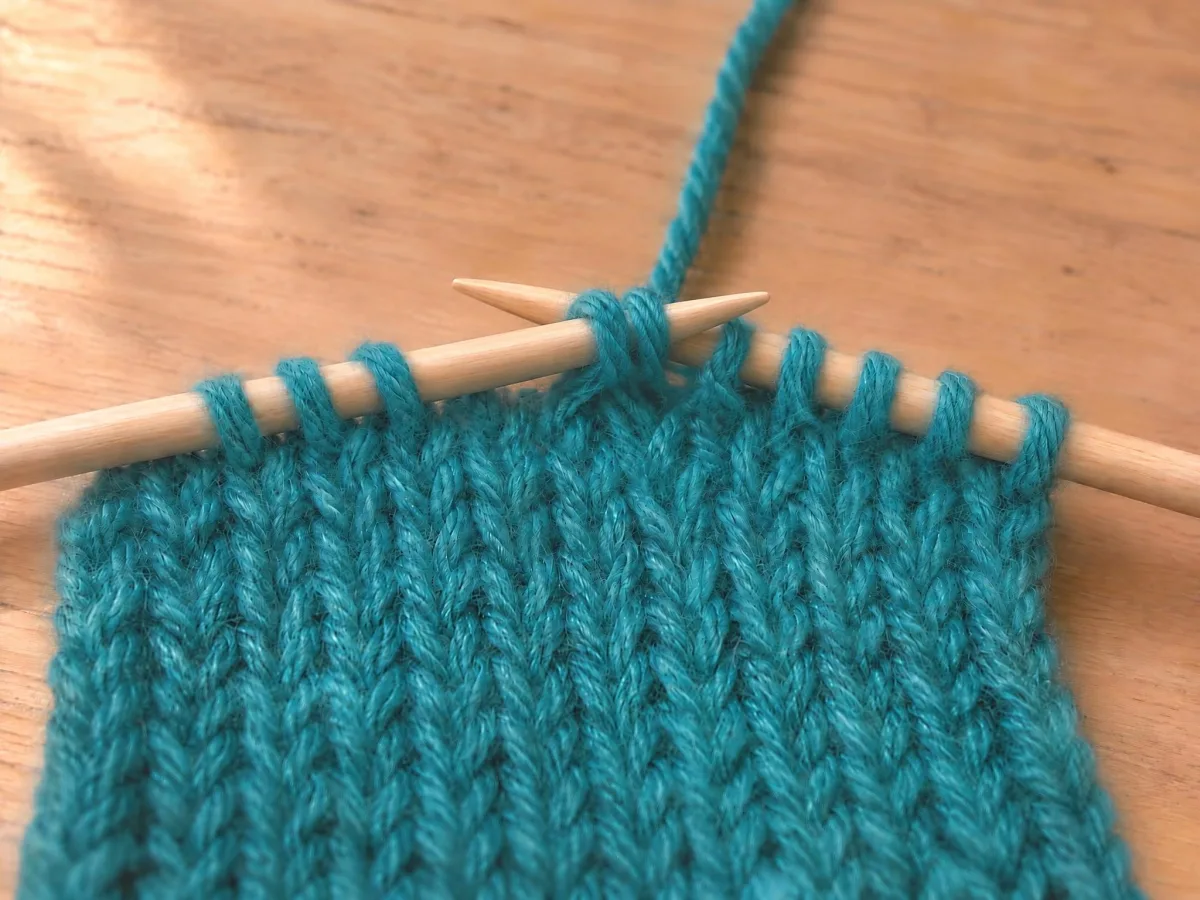
Step 4: Wrap the yarn around the right needle and knit the two stitches together as one, pulling the new loop through both and letting them slide off the left needle.
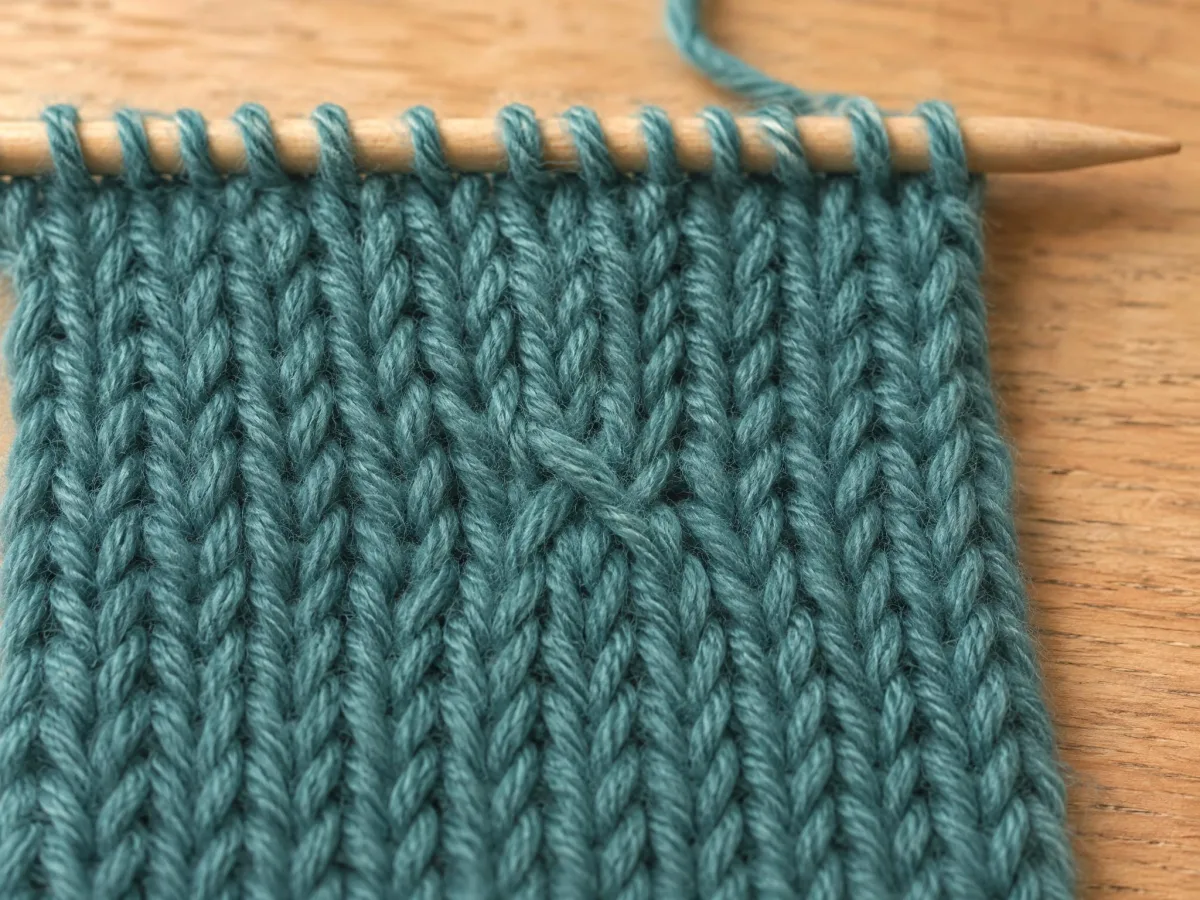
Step 5: Check the result: 1 new stitch on the right needle in place of 2. A few rows later, the decrease shows as one stitch lying over its neighbor and slanting to the left.
Why does ssk lean left?
In an ssk, the right-hand stitch of the pair ends up lying over the left-hand one, so the finished stitch slants up and to the left.
Slipping each stitch knitwise turns it on the needle, and knitting both through the back turns them back, so the decrease lies flat instead of twisted.
SSK or k2tog: which decrease goes where?
K2tog is ssk's mirror: the right needle goes into the next 2 stitches together, from left to right, and knits them as one. That decrease leans right.
| ssk | k2tog | |
|---|---|---|
| Leans | Left | Right |
| How | Slip 2 knitwise one at a time, then knit them together through the fronts from the left needle | Knit the next 2 stitches together |
| Chart symbol | \ (the top to the left) | / (the top to the right) |
| On a wrong-side row | ssp | p2tog |
A common pairing puts ssk near the start of a right-side row and k2tog near its end, so both decreases lean toward the middle of the piece, as on sock toes, raglan sleeves and mitten tops. Your pattern says which goes where.
What is skp, and is it the same as ssk?
SKP (slip, knit, pass) is another way to make a left-leaning decrease: slip 1 stitch knitwise, knit the next stitch, then lift the slipped stitch over the knit one and off the right needle. The Craft Yarn Council lists both as a single left-leaning decrease.
The two look almost the same. Passing the slipped stitch over can stretch it, so an skp often looks a little looser than an ssk. When a pattern names one, use that one.
- skp
- Slip 1 knitwise, knit 1, pass the slipped stitch over: 1 stitch decreased, leaning left.
- sl1, k1, psso
- The same decrease written out; psso is "pass slipped stitch over".
How do you make a neater ssk?
Many knitters find their ssk less tidy than the k2tog on the other side. These are the usual fixes:
- Slip the second stitch purlwise: slip the first stitch knitwise and the second purlwise, then knit them together through the fronts as usual. The decrease lies flatter.
- Slip back, then knit through the back loops: some knitters slip both stitches knitwise, put them back on the left needle and knit them together through the back loops. It's the same ssk with other hand moves; try it if the standard way feels clumsy.
- Use ssp on the wrong side: where your pattern decreases on a wrong-side row, an ssp there makes a tidy left-leaning decrease seen from the right side.
How do patterns write ssk?
Patterns write it as ssk in words and as a \ on a chart, often in a decrease row paired with k2tog.
- ssk
- Slip, slip, knit: 1 stitch decreased, leaning left.
- K1, ssk, k to last 3 sts, k2tog, k1.
- A decrease row: 1 stitch in from each edge, ssk at the start and k2tog at the end, so the row ends with 2 stitches fewer.
- \ on a chart
- ssk on a right-side row, ssp on a wrong-side row.
- ssp
- Slip, slip, purl: the wrong-side partner of ssk.
Common ssk mistakes
Knitting the slipped stitches together the k2tog way
Put back on the left needle and knitted together through their fronts, the slipped stitches make a decrease that leans right, like a k2tog. Put the left needle into the fronts of the slipped stitches while they're still on the right needle, then knit them.
Wrong
K2tog, the mirror: the 2 stitches become 1 that leans to the right. An ssk worked the k2tog way leans this way too. Right
SSK seen from the right side: of the 2 stitches below, the right one ends up lying over the left one, so the 1 stitch above leans to the left. Slipping both stitches in one go
Slip them one at a time, each one knitwise: that's what turns each stitch so the finished decrease lies flat.
Slipping both stitches purlwise
A stitch slipped purlwise isn't turned, so knitting it through the back twists it. Slip knitwise, from left to right and front to back; slipping only the second stitch purlwise is a deliberate variant, above.
Wrapping the yarn while slipping
A slip moves the stitch without the yarn. Wrapping the yarn as you slip knits the stitch instead, and the decrease doesn't happen.