
How to single crochet (sc)
Edited by Bernadett · Updated
To single crochet, insert the hook into a stitch, yarn over and pull up a loop (2 loops on the hook), then yarn over again and pull through both loops. On a new chain, the first single crochet goes into the 2nd chain from the hook, and every row after that starts with a chain 1 that doesn't count as a stitch. Patterns write it sc. UK patterns call this same stitch double crochet (dc), so a "dc" in a UK pattern is the stitch on this page.
- Pattern code
- sc
- Chart symbol
- an X
- In UK patterns
- double crochet (dc)
- Turning chain
- Chain 1, not counted as a stitch
- Chains for the first row
- 1 more than the stitches: 21 chains for 20 single crochets
What to know before your first single crochet
Single crochet is worked into a foundation chain first, then into the tops of the stitches of the row below. For practice, make a chain of 21: it gives a row of 20 single crochets.
You'll use two moves from the chain: the yarn over (yarn over the hook from back to front) and pulling a loop through. The top of every finished stitch is a V of two strands, and single crochet goes under both.
How to single crochet, step by step
Steps 1 to 4 make the first row on a chain; steps 5 to 7 make every row after it. They're written for the right hand holding the hook; if you crochet left-handed, swap the hands.
Step 1: Insert the hook into the 2nd chain from the hook, from front to back. The chain right next to the hook is skipped: it gives the first stitch its height.
1 loop on the hook
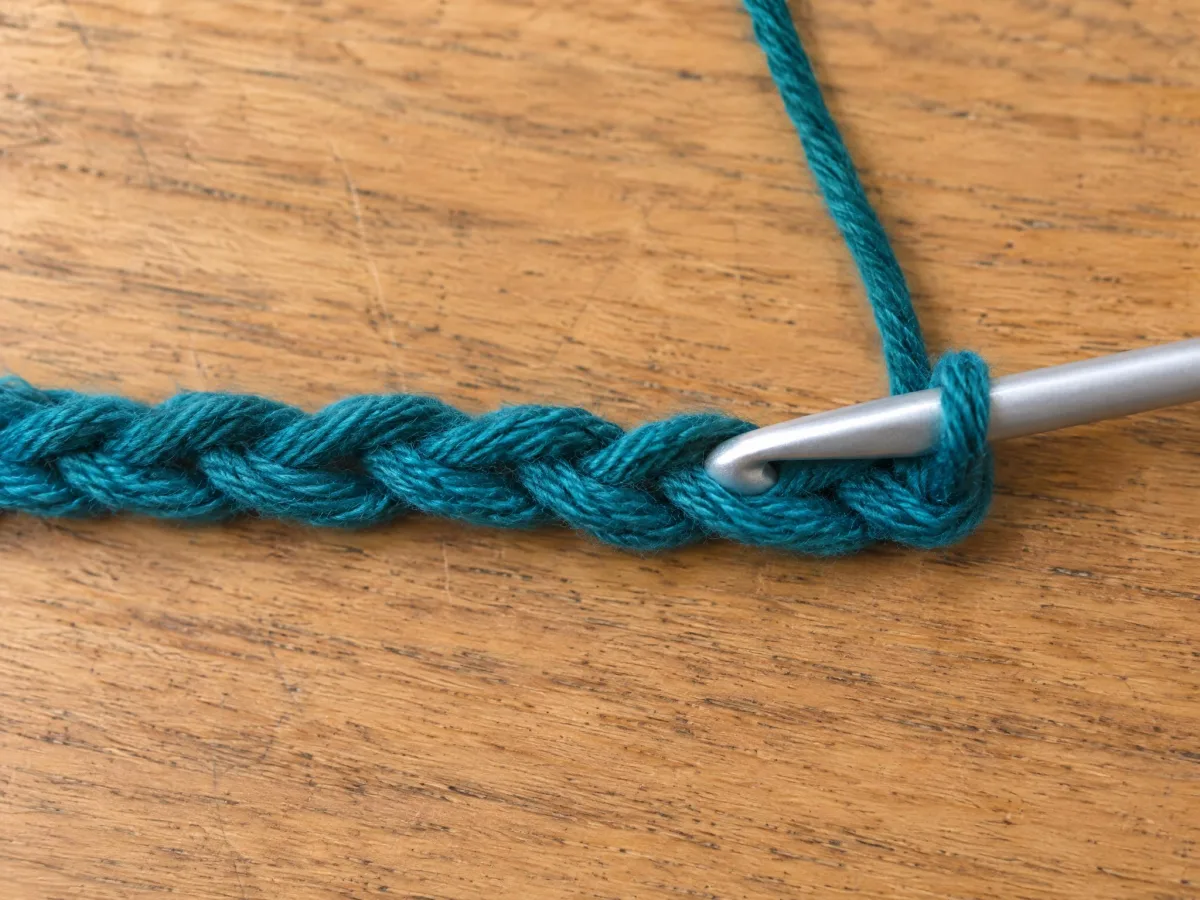
Step 2: Yarn over and pull up a loop: bring the yarn over the hook from back to front and pull it through the chain.
2 loops on the hook
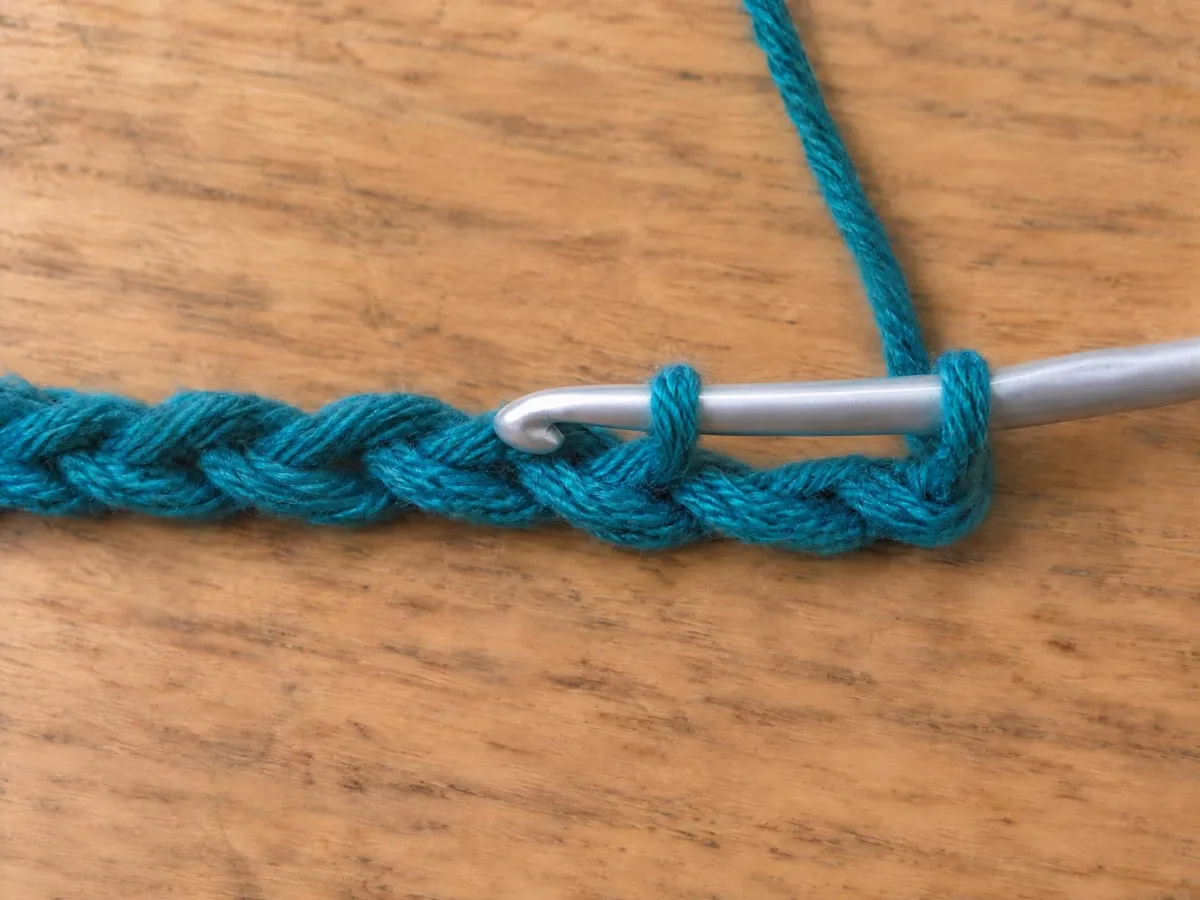
Step 3: Yarn over and pull through both loops on the hook. That's one single crochet.
1 loop on the hook
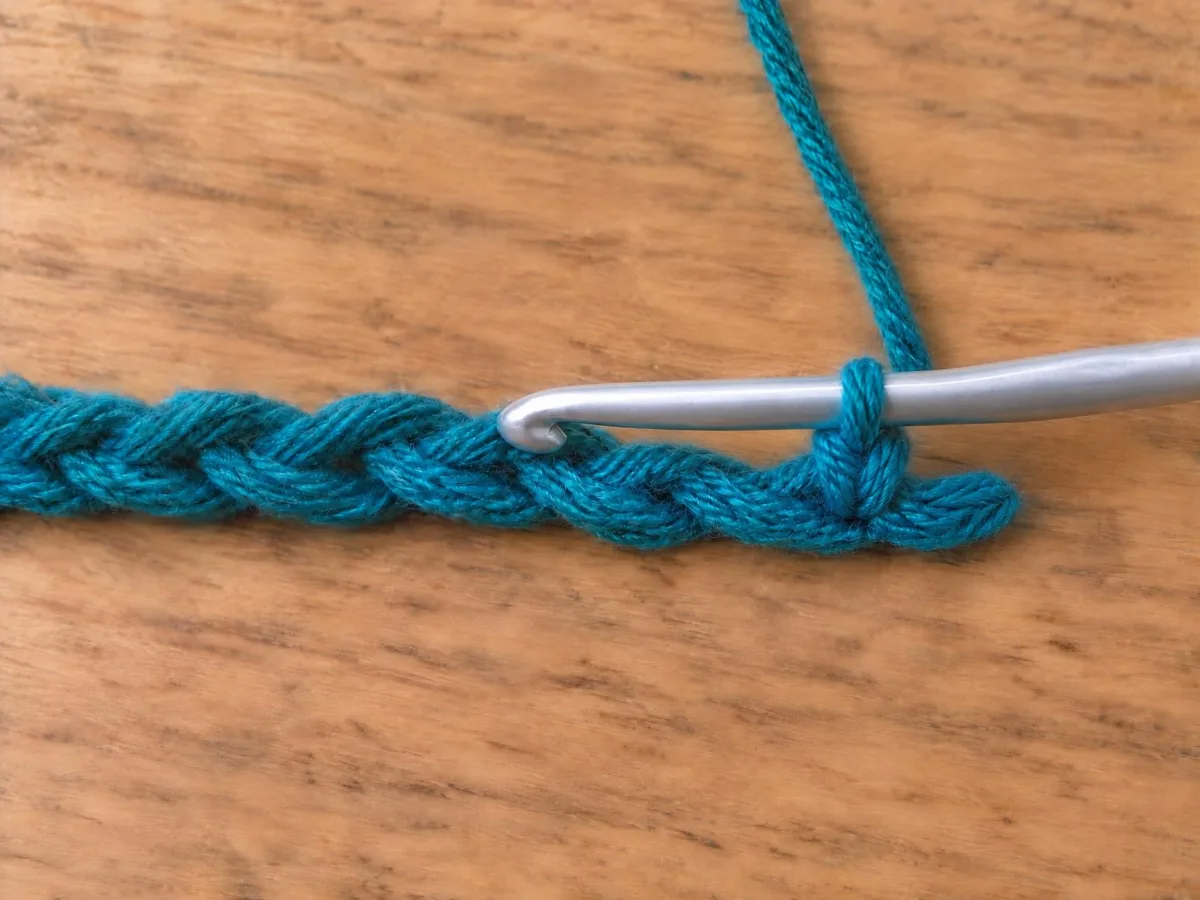
Step 4: Work 1 single crochet into each chain to the end, the last chain included, then count them: a chain of 21 gives 20 single crochets.
1 loop on the hook
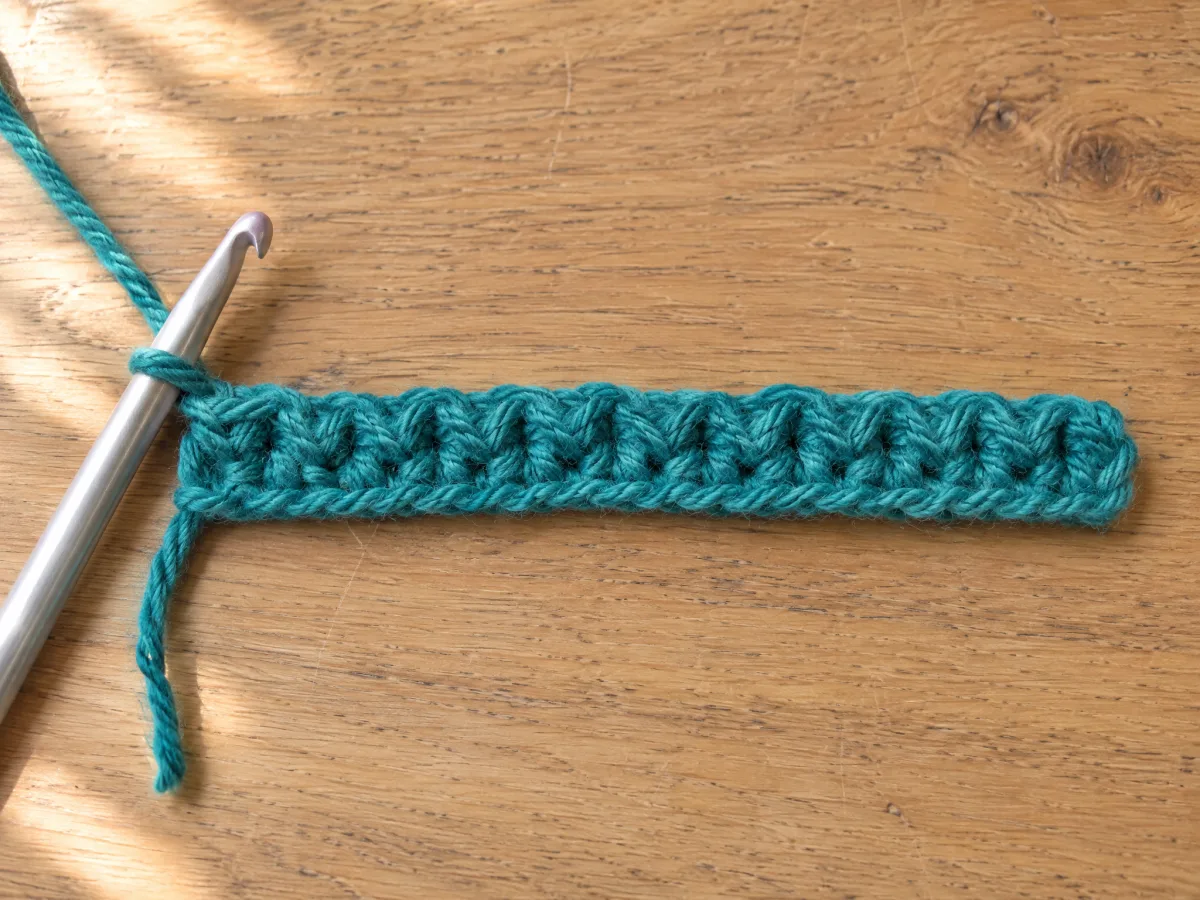
Step 5: Chain 1 and turn the work so its other side faces you, the hook staying in its loop. This chain 1 is the turning chain: it isn't a stitch, and nothing is worked into it.
1 loop on the hook
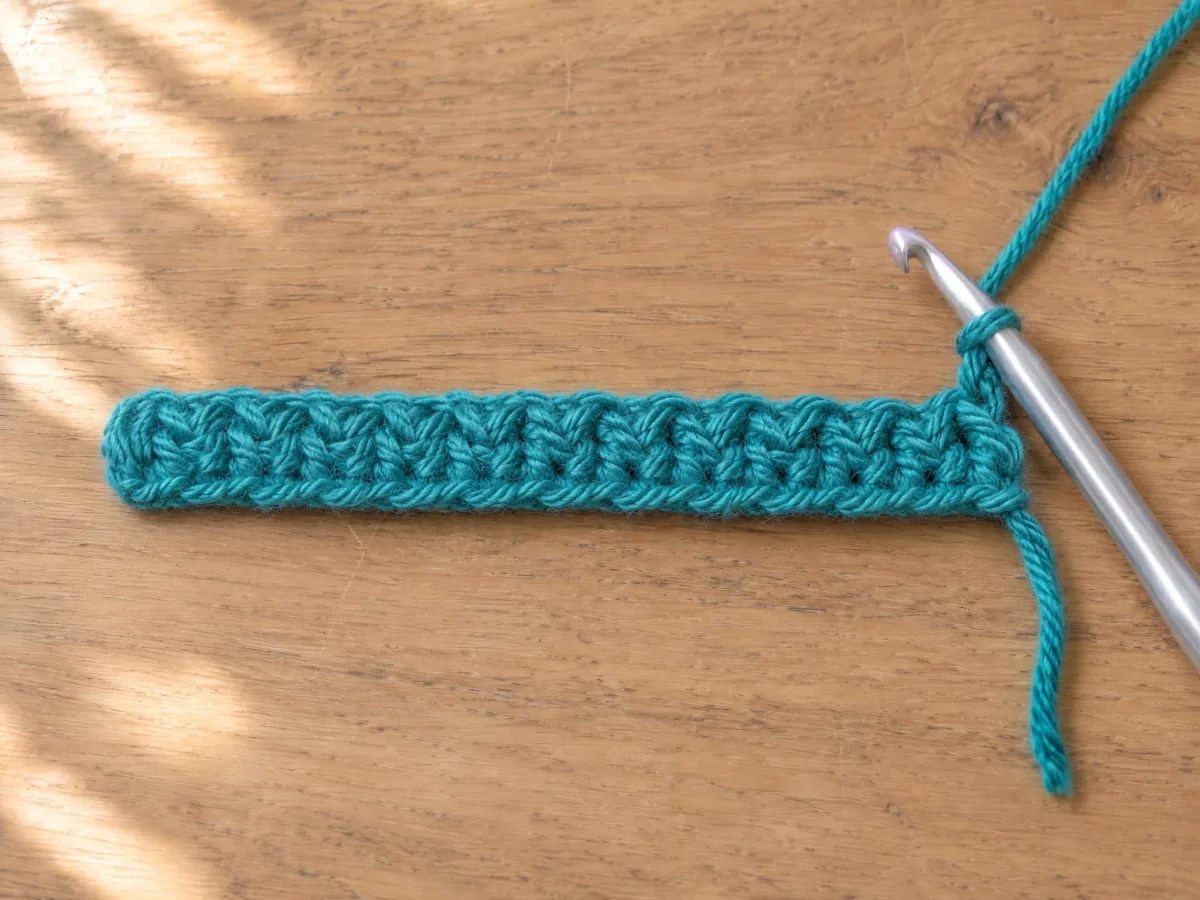
Step 6: Work the first single crochet of the new row into the first stitch, the one right at the base of the chain 1, with the hook under both loops of its V.
1 loop on the hook
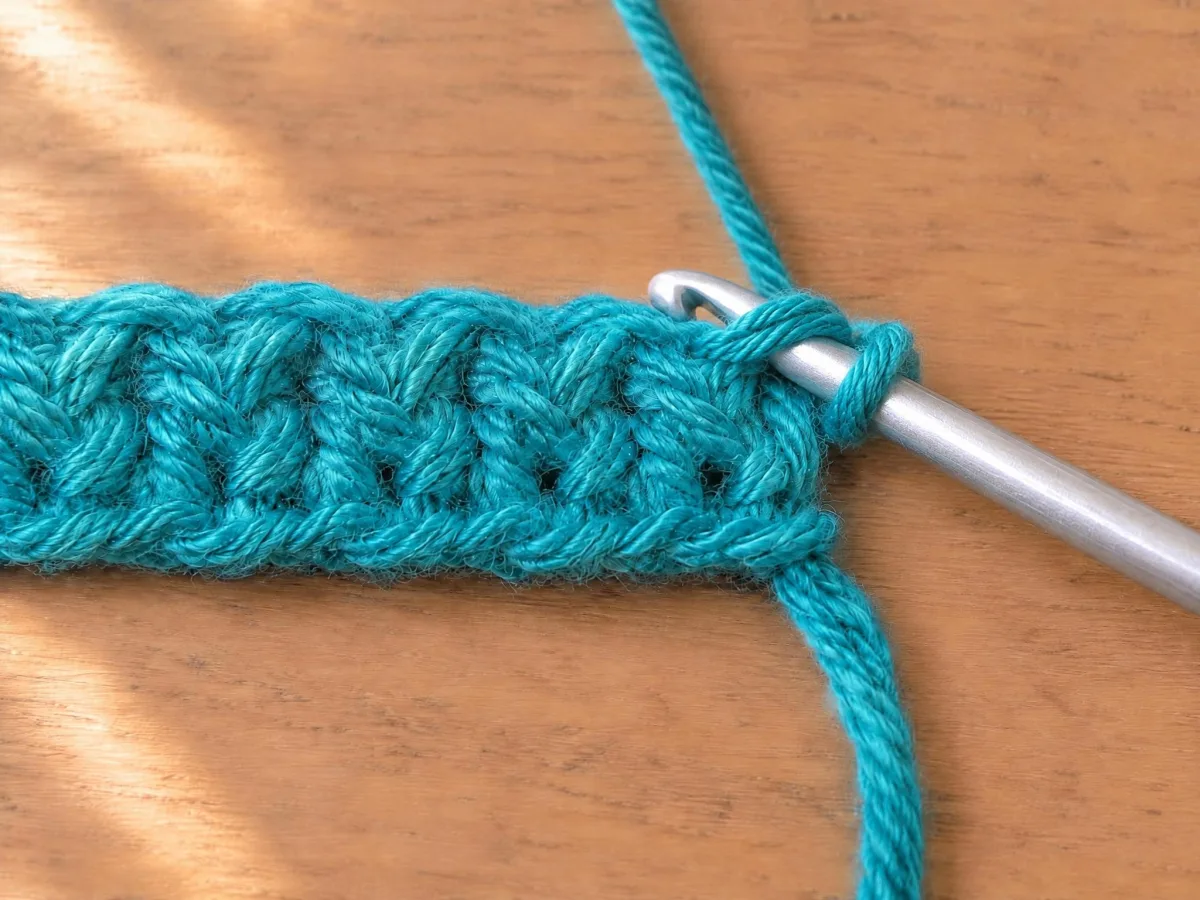
Step 7: Single crochet into each stitch across, the last one included, then chain 1 and turn again. The last stitch is the first single crochet of the row below, never the chain beside it.
1 loop on the hook
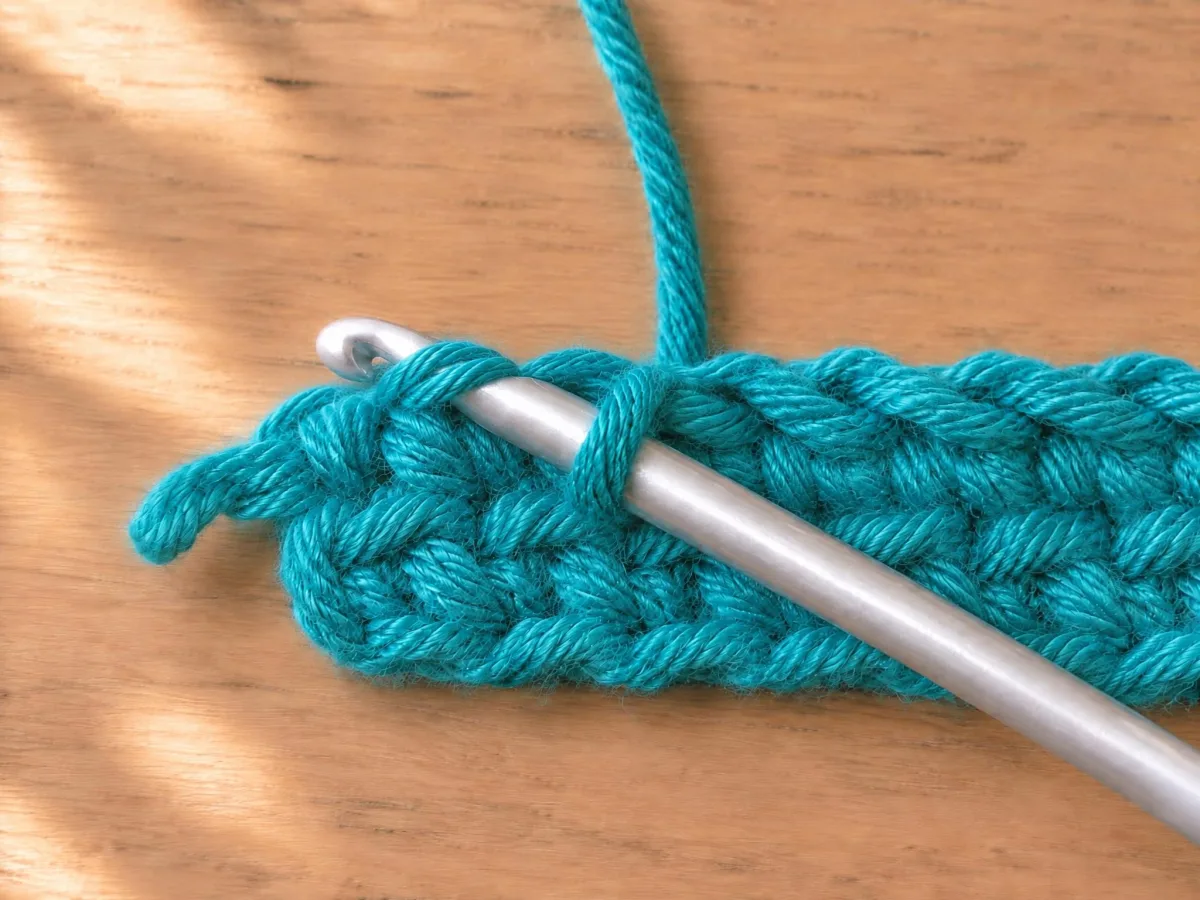
How many chains do you need for single crochet?
Chain 1 more than the number of single crochets you want in the first row. The extra chain is the one next to the hook that the first stitch skips.
| Single crochets in the first row | Chains to make |
|---|---|
| 10 | 11 |
| 14 | 15 |
| 20 | 21 |
| 28 | 29 |
When a pattern gives the chain count, use its number: "Ch 21. Sc in 2nd ch from hook and in each ch across" makes 20 stitches.
How do you count single crochet stitches?
Count the Vs along the top of the row: each V is one single crochet. Leave out the chain 1 at the start of the row, since it isn't a stitch.
Count after every row while you learn. A stitch marker in the first stitch of each row shows where the row starts, and the stitch count at the end of a pattern line, such as "(20 sc)", is the number to check.
The free row and stitch counter counts the stitches of each row with you and keeps every finished row's count, so a short row shows before you start the next one.
Why do the edges of single crochet grow or shrink?
The edges move when a row gains or loses a stitch at one of its ends, the most common cause of uneven edges. Count the row, then look at its first and last stitch:
- Wider: a stitch worked into the turning chain at the end of the row, which the eye easily takes for one more stitch.
- Narrower: the first stitch skipped (the one right at the base of the chain 1), or the last stitch missed (the first single crochet of the row below).
One stitch out is fixed in the next row: work 2 stitches together where there's one too many, or 2 into one stitch where there's one too few. More than that, pull the rows back to the last row with the right count.
Can you single crochet in rounds?
Yes: in rounds you go around without turning, for tubes, circles and toys; a circle or a toy usually starts with 6 single crochets in a magic ring. Each round is either joined with a slip stitch into its first stitch, or worked as a continuous spiral with no join, the usual way for toys.
In a spiral, nothing shows where a round ends, so a stitch marker goes in the first stitch of each round. In rows, as in the steps above, you chain 1 and turn at the end of every row instead.
How do patterns write single crochet?
Patterns write single crochet as sc, usually with where it goes and a count: "Sc in each st across. (20 sc)".
- Sc in 2nd ch from hook and in each ch across.
- The first row on a chain: skip the chain next to the hook, then 1 single crochet in every chain.
- Ch 1, turn.
- The turning chain: chain 1, turn the work. It isn't a stitch.
- Sc in each st across. (20 sc)
- 1 single crochet in every stitch of the row below; the row ends with 20 stitches.
- 2 sc in next st
- Two single crochets in the same stitch: an increase.
- sc2tog
- Two stitches worked together into one: the single crochet decrease.
- Sc in BLO
- Single crochet under the back loop only, the strand farther from you: see back loop only.
Lines like these make up a whole pattern: how to read a crochet pattern decodes a practice pattern of single crochet row by row, with every row's count.
How is single crochet different from the taller stitches?
Single crochet is the shortest stitch built up from the row below (the slip stitch stays flat), and each taller stitch adds a yarn over and a longer turning chain. Once single crochet feels even, the others use the same moves.
| Stitch | Yarn over before inserting the hook | Loops on the hook, then | Turning chain |
|---|---|---|---|
| Slip stitch (sl st) | None | Pull through the stitch and the loop at once | 0 |
| Single crochet (sc) | None | 2, then yarn over and through both | 1 |
| Half double crochet (hdc) | 1 | 3, then yarn over and through all 3 | 2 |
| Double crochet (dc) | 1 | 3, then yarn over and through 2, twice | 3 |
A foundation single crochet (fsc) row makes the chain and the first row of single crochet together, for a first row with no separate chain.
Common single crochet mistakes
Working a stitch into the turning chain
The chain 1 isn't a stitch. A single crochet into it at the end of the row adds a stitch, and the piece grows on that edge.
Wrong
Wrong: a 7th stitch worked into the chain at the end of the row. The row now has 7 stitches, and the piece grows wider on that edge. Right
Two rows of 6 single crochets on a foundation chain of 7. Row 2 starts with a chain 1 that isn't a stitch; its first single crochet goes into the last stitch of row 1 and its last into the first stitch of row 1. Each row has 6 stitches. Missing the last stitch of the row
The last stitch sits right beside the old turning chain and is easy to pass by. Put a stitch marker in the first stitch of every row; it marks the stitch that ends the next row.
Starting the first row in the chain next to the hook
That chain is the first stitch's height. Starting in it gives the row one stitch too many; start in the 2nd chain from the hook.
Going under one loop of the V
Single crochet goes under both loops of the stitch below unless the pattern says front loop only or back loop only. One loop leaves a ridge on the fabric.
The hook catches when you pull through
Pull each new loop up onto the full width of the hook before the next yarn over, and turn the hook's throat down toward the work as you pull through, so it doesn't snag the stitch.